

Just the same as in humans, cystitis in dogs is a fairly common condition and, thankfully, usually easily remedied. Cystitis simply means an inflamed bladder and it can be caused by several things, as we’ll see.
If you’ve noticed your dog is straining to urinate, asking to go out all the time but only passing drops of urine, or that there is blood in the urine, then they almost certainly have cystitis and it’s time to see your vet.
In this article, we’ll look at the signs and symptoms of dog cystitis, what causes it, how cystitis is diagnosed and treated and possible prevention strategies.
What is cystitis in dogs?
The term cystitis is a blanket term referring to bladder inflammation from any cause. For example, cystitis may be due to an infection, a bladder stone, or more rarely, a tumour. Other terms you might hear applied to conditions of the bladder are
Urinary tract infection (UTI). As it sounds, this is when bacteria have infiltrated the bladder, usually via the urethra, and caused a urinary infection. This virtually always causes inflammation and cystitis.
Lower urinary tract disease (LUTD) applies to any disease or condition that affects the bladder or the urethra.
You don’t need to get too hung up on the exact definitions because the signs are often the same. The bottom line is that, whatever the cause, you need to see your vet.


Tasty Tips
Can dogs get cystitis?
Dogs can indeed get cystitis, and as there are many different causes, it can affect any dog of any age. That said, sex, age and breed can be helpful indicators of the underlying cause.
For example, female dogs have shorter, wider urethras than male dogs, and so bacteria can more easily enter the urinary tract and cause a UTI. Some breeds of dog like Dalmatians and bulldogs have genetic problems that make certain types of bladder stones more likely.
What causes cystitis in dogs?
There are lots of things that can cause cystitis in dogs. The most common are:
Bacterial infections. These can happen to any dog, but some are more prone to infection than others, including:
Female dogs, due to their shorter, wider urethras.
Puppies, due to an underdeveloped immune system.
Dogs with anatomical abnormalities around the genitalia.
Dogs that are immunosuppressed due to disease, such as Cushing’s, or medications.
Dogs with underlying diseases that alter the urine. Prime examples would be diabetes, where the sugar in the urine provides an ideal environment for bacteria, and any disease such as kidney disease that dilutes the urine, makes it easier for bacteria to take hold.
Bladder stones or crystals. There are several types of crystals that tend to form in dog urine, and these can then clump together and form stones, sometimes in the kidneys as well as the bladder. The physical presence of crystals and stones inflames the bladder and causes cystitis.
Struvite stones are by far the most common and virtually always go hand in hand with bacterial infections in dogs. This will sometimes occur secondarily to another type of crystal or stone.
Calcium oxalate. These are more common in small breeds such as terriers and cocker spaniels and will also form in dogs with hypercalcaemia, some diseases or certain types of tumours.
Urate. These are very common in Dalmatians because they have a genetic problem that alters how they metabolise proteins. Urate stones are also seen in dogs with liver disease.
Cystine. These are virtually all breed-related and the majority are seen in entire male dogs. Bulldogs, bull terriers, Labradors and Newfoundlands are predisposed, among others.
Tumours and polyps in the urinary tract.
Idiopathic cystitis. This is a rare form of cystitis in dogs where there is no apparent cause and no infection.
Symptoms of cystitis in dogs and when to see a vet
Virtually all causes of bladder issues will present with the same signs, the most common being:
Frequent urination. When the bladder is inflamed, as some of you may have experienced yourself, it makes you feel like you need to go to the toilet all the time. You may notice your dog trying to go, but only a few drops pass at a time because the bladder is empty.
Straining to urinate. This could be for the reasons above but is also an important sign of a blocked bladder, which should be viewed as an emergency.
Blood in urine
Accidents in the house
Excessive licking of the genital area
Pain or vocalising, especially when trying to urinate
Lethargy or loss of appetite
Although most simple causes of cystitis in dogs are easily treated, any bladder issues have potentially serious consequences. Bacterial infections can travel from the bladder to the kidneys. Stones may block the outflow of urine and cause potentially fatal bladder rupture or kidney damage. With this in mind, if you see any of the above signs, you should seek veterinary advice as quickly as possible.
How is cystitis diagnosed in dogs?
Your vet will want to do a number of tests to determine the underlying cause of your dog’s cystitis because the treatment will vary from case to case. These may involve some or all of the following.
Clinical examination
It’s important that your dog has a full clinical examination, including bladder palpation. Your vet will take a thorough history from you.
Urine tests (urinalysis & culture)
These are absolutely essential in cases of cystitis. Some veterinarians may want you to bring a fresh urine sample in with you for the appointment. Always check how they want to collect the sample, but many times, a clean glass or plastic container works well.
The urine will be examined for:
Signs of infection, such as presence of bacteria and white blood cells responding to the UTI
Presence of red and white blood cells
Presence of crystals, and if present, what type
Presence of other things like casts that may indicate issues elsewhere
Culture and sensitivity. The sample will go to a laboratory where they will see if any bacteria grow from it and what kind of bacteria they are. The bacteria will be tested with various antibiotics to see which one will be most effective for treatment.
Imaging tests
If your vet is suspicious of bladder stones, tumours or anatomical problems, they may want to do radiographs (x-rays), an ultrasound or other types of imaging.
Additional tests
Blood tests might be recommended to rule out underlying disease that may be contributing.
How is cystitis treated in dogs?
As mentioned, treatment will depend on the cause and the severity of the problem. The most common modalities include:
Medication
Most often, your vet may use one or more of the following:
Antibiotics. Your vet may start these straightaway or may wait for the culture and sensitivity results. They may also change the antibiotics once the results come back.
Pain relief. This is important to help your dog feel comfortable again, as cystitis is usually a very uncomfortable condition.
Anti-inflammatories. These will help your dog to start urinating more normally again, in many cases very quickly.
Nutrition and hydration
It’s important to keep your dog hydrated. Whether your dog is dealing with an infection or bladder crystals, you want urine flushing the system as much as possible. Provide several fresh water bowls around the house to encourage drinking. You can also add water to your dog’s food by feeding them tinned food or soaking their kibble.
Your vet may also recommend a special diet in the case of crystals or stones to reduce the rate at which they’re produced, and in some cases, actively dissolve them. Never start one of these foods without the say-so of your vet, as some of them are not suitable for all dogs.
Surgery
In some cases, such as with stones that can’t be dissolved or tumours and polyps, your vet may need to operate to remove them.
Monitoring and follow-up
It’s very important that you stay in close contact with your vet until you are both 100% sure that the issue is resolved. Many cases are fully resolved with a short course of treatment, but some dogs, especially those with crystals and/or stones or a condition making the dog prone to urinary issues, need close long-term monitoring, including regular urine tests and sometimes imaging.
Is cystitis in dogs dangerous?
Most cases of cystitis in dogs are easily treated and should clear up quickly. However, all bladder issues can have serious consequences. Bacterial infections can get into the kidneys, and stones may block the urethra, which can be life-threatening.
Early diagnosis and treatment is absolutely essential. If you see any of the signs mentioned above, seek immediate veterinary advice.
How long does cystitis last in dogs?
As the old adage goes, ‘How long is a piece of string?’ How long your dog takes to recover will depend on the cause of the cystitis, the treatment needed and the severity of the problem.
An acute, uncomplicated UTI will usually be cleared by 3-7 days of antibiotics. Some deeper-seated bladder infections may need longer. For more chronic problems, such as if you’re trying to dissolve a large stone, it may take weeks to months.
Your vet will be able to guide you best as to what to expect for your individual dog’s case.
Can cystitis be prevented? What if my dog has a chronic problem?
While you can’t be certain your dog will never get cystitis, there are some things that will help lower the risk.
Always have plenty of fresh water available
Give your dog lots of opportunities to urinate. This prevents urine from sitting in the bladder for long periods where it could start to irritate the lining or allow crystals and stones to develop.
Good nutrition and weight management. Keeping your dog fit and slim helps their health in a multitude of ways. Balanced nutrition is also important.
Regular vet checks. As always, the earlier you find a problem, the easier it is to treat and the better the likely prognosis.
If your dog has a chronic problem, by being fastidious with the above advice, you should be able to stay right on top of it. The long-term cases that do best are the ones with the owners who follow advice the best, and with it! Don’t lose touch with your vet, as regular checks, especially urine samples, are really essential. This might mean an appointment every few weeks to start with before spacing out to more distant intervals. Be guided by your vet team, and never be afraid to ask questions or seek help. That’s why they’re there, and it’s always better to be safe than sorry.
In Summary
Cystitis in dogs is a fairly common problem and is usually easily diagnosed and treated. There are several different causes, and management and recovery time will depend on the original problem, bearing in mind there is sometimes more than one thing happening at once.
By keeping your dog active and slim, hydrated and well-nourished, you will lower the risk of issues and hopefully side-step the issue for life. Remember, if you do see any signs of urinary problems, see your vet straightaway and follow their advice to the letter for the speediest outcome possible.
Frequently asked questions about cystitis in dogs
What is cystitis in dogs?
The term cystitis simply means an inflamed (and usually painful) bladder. It may be due to an infection (UTI) but may also be due to other things like a bladder stone.
Is cystitis in dogs contagious?
No, cystitis is not contagious for other animals or humans.
Can cystitis go away on its own?
No. Cystitis always has an underlying issue that is causing damage to the bladder and should always be investigated as soon as possible.
What are the first signs of cystitis in dogs?
Most common signs of cystitis in dogs are
Increased frequency of urination
Blood in the urine
Straining to urinate and passing little or no urine
Pain or vocalising on urination
Accidents in the house
Can cystitis come back in dogs?
Yes it can. Most simple UTIs are a one-off, but in cases of dogs with underlying issues such as diabetes or bladder stones, they can easily recur and need to be monitored long-term with regular veterinary checks.
Reviewed by Becky Mullis, DVM, DACVIM (Nutrition).

Related products
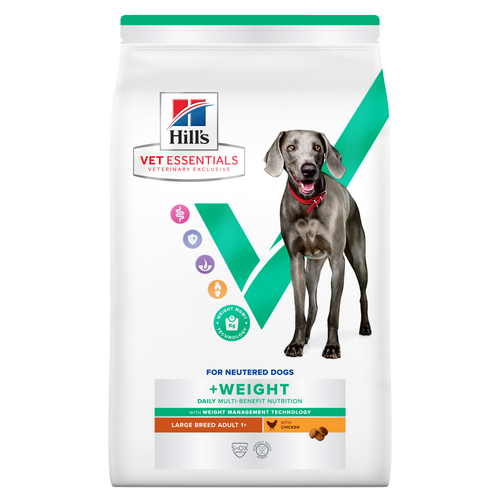
Multi-Benefit + Weight Adult 1+ Large Breed Dry Dog Food
Chicken recipe dry dog food for large breed dogs after neutering, helps support digestion and joint health. With unique weight-management technology to help reach & maintain optimal weight.
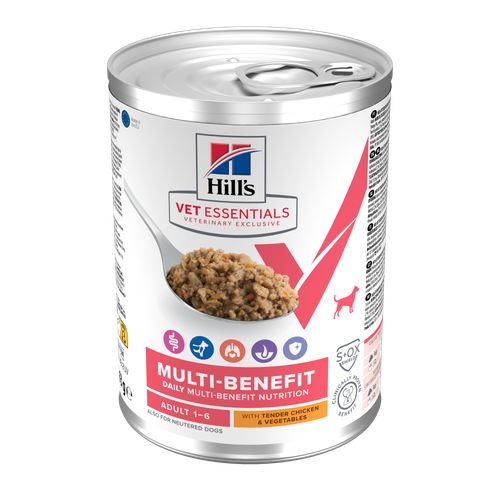
Multi-Benefit Adult Dog Food
Tender chicken recipe wet dog food, complete and balanced nutrition to support healthy digestion. With controlled minerals for healthy vital organs and clinically proven antioxidants for immunity.
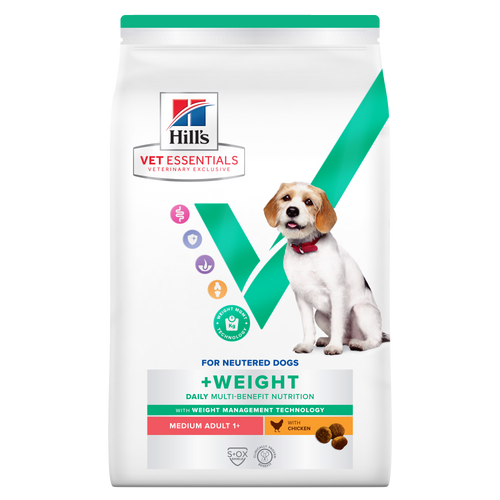
Multi-Benefit + Weight Adult 1+ Medium Dry Dog Food
Chicken recipe dry dog food for medium breed dogs after neutering, helps support digestion and joint health. With unique weight-management technology to help reach & maintain optimal weight.
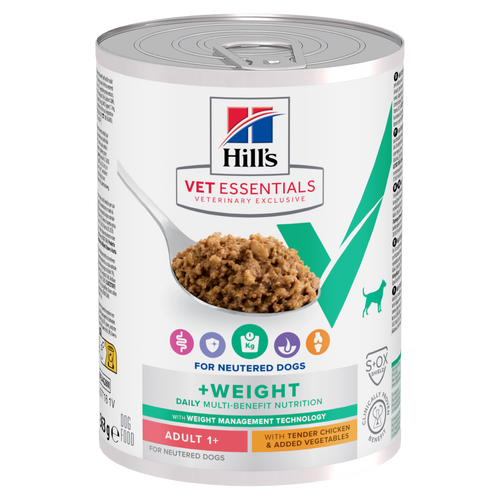
Multi-Benefit + Weight Adult Wet Dog Food
Hill's Vet Essentials Multi-Benefit + WEIGHT wet dog food with tender Chicken (in a can for Adult dogs older than 1 year, after neutering or breeds that are prone to weight gain) is vet-exclusive, multi-benefit nutrition formulated to support a healthy weight, as well as digestive and joint health. Our unique Weight-management Technology supports fat burning and helps dogs achieve & maintain optimal weight — for a better today and many more tomorrows.
With nutritional benefits that are comparable to our dry food, wet foods can help increase your pet’s water intake and are a great way to satisfy your dog’s need for variety, with many ways to mix wet and dry foods.
Related articles
Is Senior Dog Food Necessary? Understanding the Difference Between Senior, Mature and Adult Dog Foods
Learn why senior dog food is necessary, how it differs from adult formulas, and when to switch to support your dog’s ageing health and vitality.
Gastroenteritis in Dogs: What You Need to Know
Learn the types of gastroenteritis in dogs, the various ways symptoms that can show up, treatment options and when it's serious enough for a vet visit.
Why Is My Dog Throwing Up After Eating?
Why is my dog vomiting and not eating? Or why is my dog throwing up after eating? When a dog throws up, you're right to be concerned. Find out more here.

Helping Senior Dogs and Cats with Incontinence: Causes and Solutions
Learn why senior dogs and cats develop incontinence, the signs to watch for and how bladder control problems can be treated and managed with care and support.

Put your dog on a diet without them knowing
Our low calorie formula helps you control your dog's weight. It's packed with high-quality protein for building lean muscles, and made with purposeful ingredients for a flavourful, nutritious meal. Clinically proven antioxidants, Vitamin C+E, help promote a healthy immune system.
Put your dog on a diet without them knowing
Our low calorie formula helps you control your dog's weight. It's packed with high-quality protein for building lean muscles, and made with purposeful ingredients for a flavourful, nutritious meal. Clinically proven antioxidants, Vitamin C+E, help promote a healthy immune system.