


Problems with the urinary tract are common in cats, but surprisingly, urinary infections are not. This is because domesticated cats descended from desert cats and are very good at preserving water, which means that healthy cats usually have such concentrated urine that it is difficult for bacteria to take hold. That said, in some situations, urinary tract infections can still occur.
You may hear urinary tract infections called UTIs, bladder infections or cystitis. Note that, strictly speaking, cystitis refers to inflammation of the bladder and may or may not be caused by an infection.
In this article, we’ll look at the causes of UTIs in cats, signs and symptoms, diagnosis and treatment. We’ll also look at ways you may be able to prevent UTIs and look at the long term care for cats which are prone to them.
What are urinary tract infections in cats?
As it sounds, a UTI is a bacterial infection of the urinary tract. The urinary tract is split into two parts:
- The upper urinary tract includes the kidneys and the ureters. Ureters are the thin tubes that transport urine from the kidneys to the bladder.
- The lower urinary tract includes the bladder and the urethra. The urethra is the tube by which urine moves from the bladder out of the body.
Infections can occur anywhere in the urinary tract but are much more common in the bladder because bacteria from the skin, genitals, environment or the cat’s mouth during grooming can travel up from the urethra. Bladder infections can travel up to the kidneys and be life-threatening. There are other bladder conditions such as blockages that are also life-threatening, so always see your vet as soon as possible if you have any concerns.
Difference between UTIs, cystitis and bladder infections in cats
The language around problems of the urinary tract can be confusing and terms are sometimes used interchangeably. The signs and symptoms of pretty much any urinary tract problem are the same, and they all need prompt attention and treatment.
- UTI. This is an actual infection and can be located anywhere in the urinary tract but most often affects the bladder. Infections cause inflammation of the bladder, which is why people may call UTIs cystitis.
- Cystitis is inflammation of the bladder. This could be due to infection, but much more commonly in cats, it’s associated with chronic stress. You can find out more about stress cystitis, also known as feline idiopathic cystitis (FIC).
- Feline Lower Urinary Tract Disease (FLUTD). This is a broad term that can encompass any issue with the lower urinary tract, such as the above conditions, bladder cancer, and bladder stones and crystals.
What causes urinary infections in cats?
Urinary tract infections can be caused by anything that directly or indirectly allows bacteria to get past the body’s defences and into the tract, including:
- Conditions that dilute the urine. As mentioned, cats usually have urine that is very concentrated, and bacteria do not survive in it. Dilute urine can allow bacteria to take hold. The most common causes of dilute urine are:
- Underlying disease. Lots of diseases cause what’s known as polydipsia polyuria, or PUPD. This means your cat drinks and urinates more than normal. Diseases such as chronic kidney disease (CKD), diabetes and hyperthyroidism all cause the urine to become more dilute. These kinds of diseases are more common in older cats, so cats over ten years of age tend to be more prone to UTIs.
- Medication. Some medications such as steroids and diuretics cause cats to drink excessively, which dilutes the urine.
- High-salt diet. Some cat foods are high in salt, and the kidneys expel excess salt in the urine, which uses more water and makes the urine dilute.
- A weakened immune system. This is most commonly due to underlying disease or conditions that require long-term steroids or other immuno-suppressants. A weakened immune system means the body’s defences against bacteria are lowered.
- Conditions that make bacteria more likely to enter the urinary tract:
- Previous surgery. Cats – particularly males – that have unresolvable or frequent urethral blockages or that have had trauma to the urethra which caused constriction may have a surgery called a perineal urethrostomy. This is where the narrowest part of the urethra, and thus the penis, is removed, and the bladder connects directly to the skin with a larger opening. This makes it easier for bacteria to enter.
- Sex. Female mammals are more prone to UTIs in general because their urethras are shorter than their male counterparts. This reduced distance to the bladder makes it easier for bacteria to ascend.
- Other infections in the body. If your cat has an infection elsewhere, such as in the skin around the genitals or septicaemia from something like dental disease, bacteria can make their way into the urinary tract, either via the urethra or the kidneys.
Symptoms of urinary tract infections in cats
Virtually all urinary tract problems, including UTIs, have similar symptoms. The most common ones are
- Frequent urination.
- Straining to urinate.
- Blood in urine.
- Urinating outside the litter tray, whether beside the tray or anywhere else in the house.
- Crying when urinating or other signs of pain such as reluctance to get in the tray.
- Licking genital area.
- Lethargy or hiding.
- Strong-smelling urine.
As many cats go outside to urinate, it’s easy to miss many of these signs, so keep an eye out for things like going outside more frequently than normal and more subtle things like hiding away or overgrooming the rear end. If you notice lethargy or loss of appetite, it may be quite advanced and you should get an emergency consultation.
How are feline urinary tract infections diagnosed?
Veterinary examination
Seek urgent veterinary attention if you notice any of the above signs. Your vet will want to do a full clinical exam and get a thorough history from you. The more details you can give the better.
Urine tests
These are absolutely essential. Depending on how full your cat’s bladder is, your vet may need to admit them to get a sample. Sometimes these can be taken relatively quickly through cystocentesis. This is where a needle is placed into the bladder and urine is collected with a syringe.
- Urinalysis will check
- The pH of the urine.
- The specific gravity (USG). This is a measure of how concentrated the urine is.
- Presence of inflammatory cells.
- Presence of blood.
- Presence of bacteria.
- Presence of crystals and what type, if any, they are.
- Bacterial culture and sensitivity tests will be done to find out if an infection is present and what antibiotics will work best.
Imaging tests
Imaging tests such as radiographs (x-rays) or an ultrasound may be needed, especially if your vet is concerned about bladder stones, kidney problems, blockages or tumours.
Blood tests
In some cases, your vet may want to do blood tests if there are concerns about underlying disease.


Tasty Tips
Treatment for bladder infections in cats
The exact treatment will depend on the cause of the urinary problem and whether there are other problems such as a blockage. For simple cases, the following treatments may be administered:
Medication
- Antibiotics. Your vet may give your cat antibiotics straight away if the initial testing indicates an infection is present. Be aware that these may be changed once the culture and sensitivity results are back, which can take a few days. Your vet may also decide to wait for those results depending on how your cat is doing.
- Pain-relief medication and anti-inflammatories can make a huge difference very quickly to the comfort and welfare of your cat.
Nutrition and hydration
It’s important to keep your cat well-hydrated to keep flushing urine through the urinary tract and help eliminate the infection. Keeping the urine dilute will also help to avoid cells and crystals in the urine clumping together and causing a blockage. You can help by
- Having several bowls of fresh water around the house. This way, your cat never has to go far to get a drink.
- Feed your cat wet food or see if they will eat their kibble soaked in warm water. Adding water to your cat’s food by these means is often the easiest way to ensure water intake.
- Your vet may also recommend a special urinary support food.
Remember to always follow your vet’s advice and always finish any course of treatment or antibiotics you’ve been given.
Home care and monitoring
When your cat gets home, it’s a good idea to provide litter trays if your cat usually goes out and provide extras if you have them. Make sure they are away from food and water in several different quiet locations. This will help encourage your cat to go to the toilet, especially if it’s cold and miserable outside!
Be vigilant for signs of worsening or other changes, and stay in touch with your vet.
Are urinary tract infections dangerous for cats? When should I see my vet?
Always seek immediate veterinary attention if you see any of the signs we mentioned, including blood in the urine, straining, loss of litter control or any difficulty going to the toilet.
Urinary tract infections are easily treatable once your vet knows what bacteria is involved. Most cases are not dangerous, but left untreated, your cat may get a kidney infection, bladder damage or other complications which can all be very serious, so always get help as soon as you notice any issues at all.
How long does a urinary infection last in cats?
The same as in humans, most UTIs in cats will be cleared up within 3-7 days of antibiotic treatment. In some cases, it may take longer; for example, if your cat is elderly or the infection is very deep-seated in the bladder. Your vet will probably want to do a repeat urine culture to make sure it’s all clear and the treatment can stop.
Preventing recurrent urinary tract problems in cats
While urinary tract infections are quite uncommon in cats, other urinary problems, most often associated with stress, are much more common. In these cases, you may need to address more issues long term.
Your veterinary team will guide you through this. Many cats with chronic urinary issues can be managed well with some modifications at home. These may include:
- Providing plenty of fresh water in several locations around the house.
- A urinary support diet, if your vet suggests it. These can make a huge difference. Remember never to switch to a dietetic food without your vet’s say-so.
- Keeping litter boxes clean and accessible. You should have one more litter tray than you have cats, as a minimum.
- Reducing stress. This is fundamental. Stress is most common in indoor cats and those that live with other cats but can affect solitary cats too. Your vet will be able to guide you to resources to look at all the ways you can reduce stress in the home.
- Regular veterinary check-ups or contact with your vet to stay ahead of the game.
- Keeping your cat slim. Obesity is a risk factor for urinary problems, as well as many other health conditions, such as diabetes. Keeping your cat slim and active throughout life is always the best way to keep them healthy and happy.
Summary
Urinary tract infections are uncommon in cats and can usually be relatively quickly and easily treated. The problems come when other conditions, such as immune issues or diseases like diabetes, make them more likely to recur.
Always see your vet as soon as you can if you have the slightest concern about urinary issues. The sooner you get a diagnosis, the sooner you will be on top of things and the sooner your cat will get a spring back in their step.
Frequently asked questions about UTIs and bladder infections in cats
What causes urinary tract infections in cats?
Fundamentally, bacteria. These can enter the tract through the bloodstream or, more commonly, by ascending the urethra. UTIs are not common in cats but are more likely in older cats or cats that have dilute urine due to conditions like kidney disease or diabetes.
What are the first signs of a bladder infection in cats?
Most often, the first signs are straining to urinate but only passing small amounts, blood in the urine, loss of litter control, pain or vocalising on urinating, and increased frequency of urination.
How are feline urinary infections treated?
With antibiotics after doing a urine culture to identify the type of bacteria that have caused it and which antibiotics will be most effective. Your cat may also be given pain-relief medication and anti-inflammatories to make them more comfortable.
Are bladder infections painful for cats?
Yes. Bladder infections cause cystitis – an inflamed bladder – and this is painful.
Can urinary infections come back in cats?
Yes, they can recur, especially if there is an underlying disease that’s diluting the urine or weakening the cat’s immune system.
When is a urinary infection an emergency?
All urinary problems can escalate rapidly and can be life-threatening if left untreated. Always seek prompt veterinary attention if you have any concerns at all.
Reviewed by Becky Mullis, DVM, DACVIM (Nutrition).

Related products
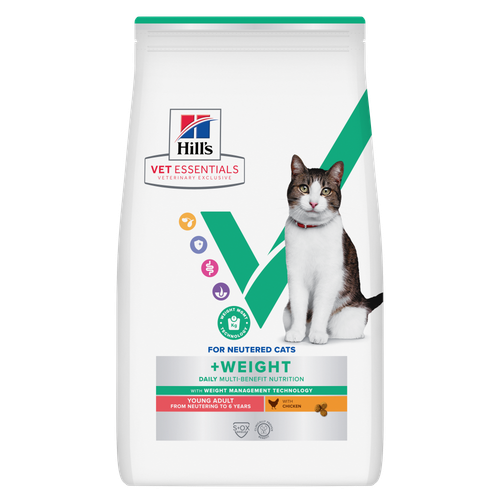
Multi-Benefit + Weight Young Adult Dry Cat Food
Hill's VET ESSENTIALS MULTI-BENEFIT + WEIGHT dry cat food with Chicken (for Young Adult cats after neutering and up to 6 years old, or breeds prone to weight gain) is vet-exclusive, multi-benefit nutrition formulated to support a healthy weight, as well as urinary and digestive health. Our unique Weight-management Technology helps them achieve & maintain optimal weight.
To support a better today, and many more tomorrows.
Multi-Benefit Adult Wet Cat Food
Slow-cooked chunks of salmon or chicken in gravy wet cat food in a pouch for adult cats. Complete & balanced nutrition to support healthy digestion, with high-quality protein for muscle growth.
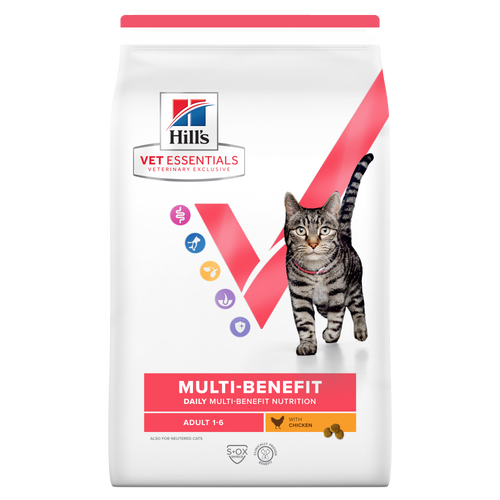
Multi-Benefit Adult Dry Cat Food
Chicken recipe dry cat food for adult cats, complete and balanced nutrition scientifically formulated to support healthy digestion, with high-quality protein for muscle growth.
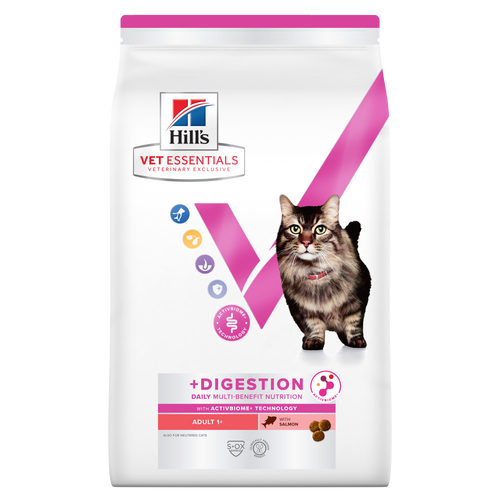
Multi-Benefit + Digestion Adult Dry Cat Food
Hill's Vet Essentials Healthy Digestive Biome with ActivBiome+ technology is clinically proven to support healthy digestion by feeding the unique microbiome that lives in your cat’s gut
Related articles

Cystitis in Dogs: Symptoms and Care
Learn the symptoms, causes and treatment of cystitis in dogs. Find out how UTIs are diagnosed, when to see a vet and how to protect your dog’s urinary health.
Helping Senior Dogs and Cats with Incontinence: Causes and Solutions
Learn why senior dogs and cats develop incontinence, the signs to watch for and how bladder control problems can be treated and managed with care and support.

Dog Vomiting and Diarrhoea: When to Worry and What to Do
Is your dog vomiting or suffering from diarrhoea? Learn what’s normal, what’s not, and when to seek help with this vet-reviewed guide for pet owners.
Is Senior Dog Food Necessary? Understanding the Difference Between Senior, Mature and Adult Dog Foods
Learn why senior dog food is necessary, how it differs from adult formulas, and when to switch to support your dog’s ageing health and vitality.
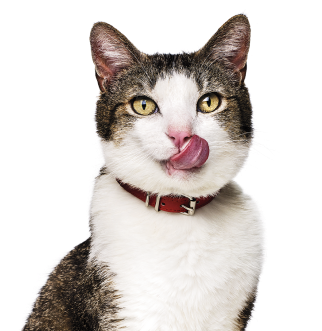
Put your cat on a diet without them knowing
Our low calorie formula helps you control your cat's weight. It's packed with high-quality protein for building lean muscles, and made with purposeful ingredients for a flavourful, nutritious meal. Clinically proven antioxidants, Vitamin C+E, help promote a healthy immune system.
Put your cat on a diet without them knowing
Our low calorie formula helps you control your cat's weight. It's packed with high-quality protein for building lean muscles, and made with purposeful ingredients for a flavourful, nutritious meal. Clinically proven antioxidants, Vitamin C+E, help promote a healthy immune system.