


Polycystic kidney disease (PKD) in cats is a genetically inherited disease that causes chronic kidney disease and eventually kidney failure. It’s most common in Persian cats and breeds related to the Persian such as the British shorthair and Birman.
All affected cats are born with tiny cysts, like pockets of fluid, in their kidneys which get gradually bigger and more numerous as the cats grow up. Because these cysts take up space in the kidneys, they gradually start to destroy the functional cells of the kidneys, and over time, this causes irreversible damage to them. The number of cysts and the rate at which they grow varies widely between cats, with most cats starting to show signs of kidney disease around seven years of age.
Thankfully, polycystic kidney disease in cats is becoming rarer and rarer now due to successful genetic screening of breeding cats, but it’s still something to be aware of if you’re thinking of taking on one of the cat breeds that are predisposed. In this article, we’ll look at exactly what PKD is, as well as symptoms, diagnosis, management and prognosis.
What is polycystic kidney disease in cats?
The kidneys are incredibly important organs.They filter waste products from the body, play a role in red blood cell production, and help stabilise and maintain the levels of minerals in the bloodstream. They are one of the few organs in the body in which the structures that filter the blood and produce urine (the nephrons) are never replaced once they are lost. That's why it's important to be aware of any factors that could cause kidney damage in our pets.
In the case of polycystic kidney disease, an inherited, progressive, irreversible condition in certain breeds of cats tends to cause kidney damage and, as a result, chronic kidney disease.
All affected kittens are born with tiny cysts in their kidneys. These are little pockets of fluid where there should be normal kidney tissue. As the kittens grow and mature, these cysts get bigger and bigger and start to destroy the normal structure of the kidney, taking up more and more space until there is virtually no normal kidney left. The number of cysts animals are born with and the speed at which they grow varies, so life expectancy can be difficult to predict.
Kidneys have a huge functional reserve. This means that you won’t usually see clinical signs of disease until about 75% of the function has already been lost. This is one of the reasons why early detection and monitoring are so important in predisposed cats. Most affected cats start to show signs around the age of seven, but it can be as early as three to as late as ten, depending on the severity.
Chronic kidney disease is a common cause of illness in senior cats, but PKD is different because the cats are born with defective kidneys and so tend to start having renal problems at a much younger age than normal.


Tasty Tips
What causes polycystic kidney disease in cats?
Is PKD genetic?
Polycystic kidney disease is an inherited defect. Because the defective gene is what’s called a dominant gene, any animal that inherits it from one or both parents will have the disease and will pass it on if bred.
Breeds most affected
- Persian. By far the most common breed affected; the crossing of Persians to create new breeds led to PKD becoming widespread across many breeds.
- Exotic shorthair
- Scottish fold
- Himalayan
- British Shorthair
- Birman
What are the symptoms of polycystic kidney disease in cats? When should I see my vet?
As PKD causes chronic kidney disease (CKD), the signs and symptoms are exactly the same as CKD, including:
- Increased thirst and urination, by far the most common early signs
- Weight loss
- Vomiting
- Lethargy
- Poor appetite
- Enlarged abdomen (advanced)
- Bad breath and gum disease associated with high levels of urea in the blood (uraemia)
As we said, many cats won’t show signs until a lot of damage has already been done. With this in mind, it’s very important that you see your vet the moment you notice any of these signs. Early detection is key to the best prognosis. The more you know what is normal for your cat, the sooner you will spot subtle changes in behaviour.
How is PKD diagnosed in cats?
Because cats with PKD present like any other cat with chronic kidney disease, the tests are mostly the same, with genetic testing being an important addition.
Blood & urine tests
These are the most common tests your vet will probably run. There are many diseases whose early signs are increased thirst and urination, such as diabetes, so your vet would probably want to rule these out first. Typically, a full biochemistry and haematology blood panel will be done. For kidney disease, the main blood tests are creatinine, SDMA and blood urea nitrogen (BUN).
When it comes to the urine test, below are some of the tests that vets usually run:
- Urine specific gravity (USG). This is a measure of how concentrated the urine is. One of the main jobs of the kidneys is water preservation. Domesticated cats descended from desert cats, and their kidneys are very good at producing highly concentrated urine. As kidney function is lost, the urine becomes more and more dilute.
- PH. This is a measure of how acidic, neutral or alkaline the urine is. This can be a useful indicator of wider problems and of urinary tract infections (UTIs).
- Microscopy. This checks for inflammatory cells, blood, signs of kidney damage, bacteria infection, crystals and other abnormalities.
- Culture and sensitivity. UTIs are actually quite rare in healthy cats, but as the kidneys fail and the urine becomes more dilute, infections can take hold. Your vet needs to know whether infection is present, and in case it is, what bacteria are involved and which antibiotics will work the best.
Ultrasound
The appearance of polycystic kidneys is very distinctive, especially once it’s in the later stages. Where there should be normal, dense kidney tissue, multiple fluid-filled holes appear in the image instead. You can see the difference between a normal kidney ultrasound and a cat with PKD below.
Genetic testing
Many responsible breeders have undertaken genetic screening of their breeding cats, and this is helping to reduce the incidence of PKD in predisposed cat breeds. However, the disease rate does not decline as quickly as others, and some cats still carry the problematic gene.
If you are thinking about getting any purebred cat, it's recommended that you know what their inherited diseases are and find a breeder that runs the tests and provides proof of the results.
Is polycystic kidney disease painful for cats?
In the early stages of PKD, the vast majority of cats show no signs and have no pain or discomfort. It is the later stages of the disease and the complications it can cause that make the cat feel ill. For example, bladder and kidney infections can occur secondary to the disease and can cause severe pain and depression. Kidney infections (pyelonephritis) can quickly become life-threatening and are an emergency.
The signs of these secondary diseases are quite similar to other conditions such as chronic kidney disease, so be on the lookout for signs such as poor appetite, nausea and vomiting. If you notice anything out of the ordinary, you should contact your vet.
Monitoring and management of cats with PKD is essential to spot complications as soon as they occur, or preferably even before.
Treatment and management of PKD in cats
Sadly, the bottom line is that polycystic kidney disease is incurable and progressive and causes markedly reduced life expectancy. However, as with CKD, there are treatment and management options that can improve your cat’s quality and length of life.
Nutrition
For all cats with kidney disease, changing to a kidney-supportive food is fundamental to prolonging their life. Renal or kidney support foods feature:
- Reduced overall protein content but high-quality protein. This reduces the work load on the kidneys but still allows your cat to get enough protein to maintain their condition and muscle mass.
- Restricted phosphorus. This is very important and plays a major role in slowing the progression of the disease.
- Restricted sodium, which reduces the burden placed on the kidneys and helps manage blood pressure.
- High omega-3 fatty acids, which are known to help break the cycle of inflammation.
- Added antioxidants, which help combat cell damage and promote a healthy immune system.
Remember, never start your cat on any food without your vet’s say-so. These foods are not always suitable for cats with other conditions.
In addition to kidney support food, it’s important to ensure your cat stays hydrated. Feeding them wet food or seeing if they will eat kibble soaked in warm water is a great way to get them to consume more fluids. Ensure there are multiple water stations all over the house so that your cat never has to go far for a drink. Many cats love to drink running water, so fountains can be a big help too.
Medications
There are various medications that can help cats with kidney disease. The main ones aim to keep a normal blood pressure to avoid further kidney damage and bind phosphorus in the gut to reduce absorption. The latter may be particularly important if your cat can’t eat a kidney support food for any reason. Your vet may also want to provide drugs for nausea, if your cat is in the later stages, or pain relief.
Monitoring and vet check-ups
Regular check-ups are critically important. Your vet will guide you as to the frequency of visits and repeat tests depending on your individual cat. This may entail yearly tests if your cat was diagnosed in the early stages by ultrasound or as an incidental finding. Tests are likely to be done every 3-6 months as the disease progresses.
How long do cats live with polycystic kidney disease?
This is incredibly variable and depends on how quickly the cysts grow and develop and how many an individual cat had at birth. It can’t be stressed enough how important early diagnosis and management are for any pet health condition, and this is especially true in the case of kidney disease. The sooner you know it’s there, the sooner your vet can implement measures to slow its progression.
If your cat is diagnosed in the latter stages and is already showing signs of the disease, life expectancy may only be weeks to months, but many cats with PKD can live for years after diagnosis and lead relatively normal lives. In a Japanese study, the average age at death of cats with PKD was 12.7 years. Your vet will be able to give you a better idea of your cat’s life expectancy based on the combined test results for your individual cat.
Quality of life and daily care. When should I consider euthanasia?
No pet parent wants to think about losing their beloved pet, but if your cat has a diagnosis of PKD, it’s good to discuss quality of life with your vet early and openly. Many cats live long lives with PKD but end-stage kidney disease is unpleasant. As the disease evolves, it's very important that you, as a pet parent, can recognise whether your cat no longer has a good quality of life.
Talk to your vet about when they feel it appropriate to draw the line based on the signs of decline your cat presents. Signs of illness can be very subtle in cats, so look for things like:
- Loss of appetite
- Not interacting
- Sleeping all the time
- Not wanting to go out
- Poor coat
- Weight loss
These are all things that might mean the time is right to say goodbye. If you know what to expect, you and your family can be prepared.
Can PKD be prevented?
Yes, by simply not breeding from affected animals. Sadly, there are many purebred animals afflicted with inherited disease and poor health due to the bodies they have been born into through selective breeding by humans. Responsible breeding is essential, but so is pet choice from prospective pet parents. Always do your research into what diseases a breed suffers from, and talk to a vet rather than simply looking at breed websites.
Never ever buy from a breeder who won’t disclose test results or a breeder who doesn’t test. Even if you’ve already fallen in love with the bundle of fluff!
PKD is a disease with pretty straightforward genetics and a reliable genetic test. Making a responsible choice when getting a cat can encourage breeders to always conduct these tests and greatly help speed up the eradication of this disease.
In summary
Polycystic kidney disease in cats is inherited, progressive and incurable. Life expectancy depends on many things and varies widely between cats. With early detection and management, many cats with PKD live for years and have normal lives.
PKD is entirely preventable with routine screening and responsible breeding. Choose your breeders very wisely – or even better, pick a cat that has no breed. Adoption centres are full of cats and kittens waiting for a great home. You get a beautiful friend and you do a good deed at the same time. Everyone’s a winner!
Frequently asked questions about polycystic kidney disease in cats
What is polycystic kidney disease in cats
PKD is an inherited, progressive disease where cysts (pockets of fluid) develop in the kidneys over time and destroy the functional kidney tissue, leading to chronic kidney disease and eventually kidney failure.
Is polycystic kidney disease painful for cats?
As a rule, no, but in the latter stages and due to complications such as urinary tract infections, mild discomfort to severe pain may ensue.
Can PKD in cats be cured?
No. PKD is an incurable, progressive disease, but with good management and early diagnosis, many cats live for years after diagnosis.
How long can a cat live with polycystic kidney disease?
This depends on the stage and severity. Some cats may only have weeks to months if they are already in kidney failure, others may live for years after diagnosis. Some cats also have PKD that progresses more quickly than others.
How is polycystic kidney disease diagnosed in cats?
Through blood and urine tests, ultrasound imaging of the kidneys and genetic tests.
Which cat breeds are most affected by PKD?
- Persian
- Exotic shorthair
- Scottish fold
- Himalayan
- British and American shorthair
- Birman
Can polycystic kidney disease be prevented?
Yes, through genetic screening of breeding cats and responsible breeding. Once a kitten is born with the condition, it’s too late.
Reviewed by Becky Mullis, DVM, DACVIM (Nutrition).

Related products
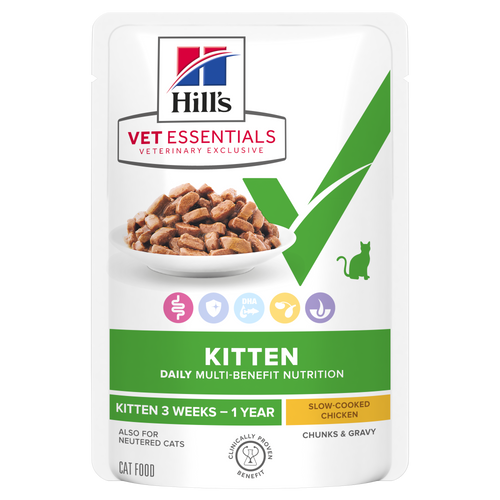
Multi-Benefit Wet Kitten Food with Slow-Cooked Chicken
Available exclusively through your veterinarian, Hill's Vet Essentials Kitten wet food with slow-cooked chicken provides advanced nutrition with 5 essential health benefits for your kitten.
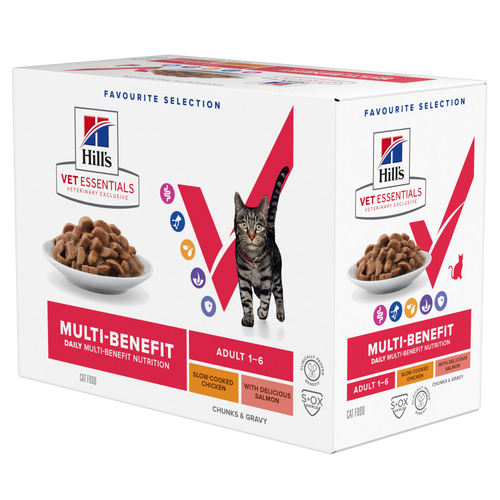
Multi-Benefit Adult Wet Cat Food
Slow-cooked chunks of salmon or chicken in gravy wet cat food in a pouch for adult cats. Complete & balanced nutrition to support healthy digestion, with high-quality protein for muscle growth.
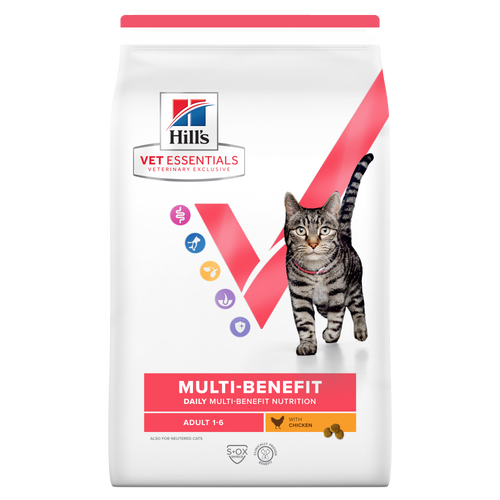
Multi-Benefit Adult Dry Cat Food
Chicken recipe dry cat food for adult cats, complete and balanced nutrition scientifically formulated to support healthy digestion, with high-quality protein for muscle growth.
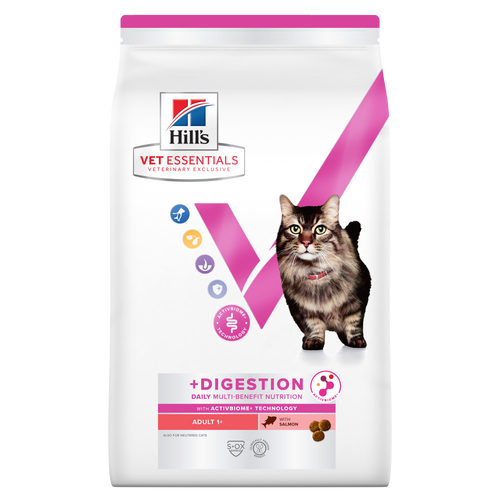
Multi-Benefit + Digestion Adult Dry Cat Food
Hill's Vet Essentials Healthy Digestive Biome with ActivBiome+ technology is clinically proven to support healthy digestion by feeding the unique microbiome that lives in your cat’s gut
Related articles
FLUTD And Urinary Tract Infections in Cats
Learn about FLUTD and urinary tract infections in cats, including their symptoms, causes, and treatments. Visit Hill's Pet UK for expert cat care guidance.
Cat Urinary Issues: Spotting The Signs and Causes
Understand the symptoms and common causes of cat urinary problems, including how to spot the signs of urinary issues. Get expert advice at Hill's Pet UK.

Cat Allergic Dermatitis: Causes & Treatments
Learn about the causes of cat dermatitis, how to spot the symptoms and the best treatment options. Visit Hill's Pet for detailed guidance and tips.

UTIs in Cats (Urinary Tract Infections): Symptoms, Causes and Treatment
Learn the symptoms, causes and treatment of UTIs in cats. Discover how urinary tract infections are diagnosed and how to protect your cat’s urinary health.
Put your cat on a diet without them knowing
Our low calorie formula helps you control your cat's weight. It's packed with high-quality protein for building lean muscles, and made with purposeful ingredients for a flavourful, nutritious meal. Clinically proven antioxidants, Vitamin C+E, help promote a healthy immune system.
Put your cat on a diet without them knowing
Our low calorie formula helps you control your cat's weight. It's packed with high-quality protein for building lean muscles, and made with purposeful ingredients for a flavourful, nutritious meal. Clinically proven antioxidants, Vitamin C+E, help promote a healthy immune system.