


We’re lucky to live in a time where our pets are living longer and longer lives due to advances in medicine and nutrition. Ageing is a normal part of life, so at some point, your mature or senior dog will start to slow down. You might have noticed that they seem stiff or are struggling to walk as far as they once did. This is normal and to be expected, but there are lots of things you can change and adapt to make these changes as easy on your dog as possible.
Why exercise still matters for senior dogs
Exercise is essential throughout a dog’s life, just the same as for us humans, both for our physical and mental health. Exercise is important for senior dogs because it:
- Helps to maintain their muscle tone and strength. If they stop exercising, they lose muscle mass and enter a vicious circle of loss of strength and muscle.
- Helps keep their joints flexible and moving.
- Helps keep their heart, lungs and circulation strong.
- Helps keep them slim. Staying slim into old age is a huge factor in overall health and maximum lifespan.
- Helps provide mental stimulation, supports emotional wellbeing, and prevents boredom and frustration—for you too!
Many pet parents ask themselves if they should walk their senior dog, and the answer is a resounding yes, but you need to adapt your habits for your individual dog. In general, shorter, more frequent walks are more beneficial than occasional bouts of lots of exercise. In fact, low-impact, consistent exercise may even help support joint mobility and help with joint pain.


Tasty Tips
Signs your dog may be struggling to walk
Unless your dog suffers a traumatic event, arthritis often develops slowly over months to years, so the early signs may be quite subtle. It’s helpful to try to spot the signs early so that you can speak to your vet about strategies to best support your pet’s mobility.
Early signs
- Stiffness, especially after a period of sleep or rest.
- Hesitation to get in the car or go up and down stairs.
- Less enthusiastic about walks.
- Slower pace on walks.
- Reluctance to play fetching games.
Moderate signs
As well as the signs above, you may see
- Shortened stride.
- Panting more than usual due to pain.
- Slipping on floors or reluctance to cross slippery surfaces.
- Frequent stops on walks.
Severe or advanced signs
As well as all the signs above, you may see
- Difficulty getting up due to hind limb weakness.
- Knuckling or scuffing of paws.
- Limping.
- Reduced appetite.
- Sitting in odd positions or pacing and reluctance to lie down.
Although arthritis is by far the most common cause of older dogs struggling to walk, other things may cause this too, such as heart problems, obesity, neurological issues, or some diseases, such as hypothyroidism, which cause lethargy.
If you notice any of these signs, see your vet as soon as you can. As with all things to do with health, the sooner you get older dog mobility issues investigated, the sooner your dog will be comfortable and moving again. And of course, your vet can rule out other underlying diseases that might be the cause of or exacerbating joint problems.
Safe and effective exercises for senior dogs
All dogs age differently, with smaller dogs generally ageing more slowly than bigger or giant dogs. More frequent contact with your vet in the senior years will make sure you can tailor the care for your senior dog to their individual problems and adjust your lifestyle accordingly.
Although long treks may be becoming difficult, there are still ways to keep your older dog moving, happy and healthy.
- Gentle, frequent walks. As mentioned, shorter, more frequent walks are much better for older dogs than occasional long ones. Walking 15-20 minutes 3-4 times a day is generally a good amount for a senior pet, but your veterinarian can provide guidance on what is best for your dog.
- Allow sniff time! Sniffing is really important for mental wellbeing in dogs. By making sure you allow plenty of sniff time, the walk will, by default, be gentle, natural exercise at your dog’s own pace.
- Avoid fetching or repetitive, intense exercise. The stop-start and sudden turns during fetching can have quite an impact on joints and should be avoided for most senior dogs.
- Swimming and hydrotherapy. Non weight-bearing exercises can be really beneficial to keep muscles strong and provide movement to stiff older dogs. Be careful to avoid panicking your dog if they are not used to this, and follow veterinary advice.
- Indoor activities for mental and physical stimulation. Gently getting your dog to move around the house with you can help if you can’t get out much. You can do things like lay scent trails, hide treats and toys to find and use puzzle feeders at meal times to help stimulate your dog.
- Physiotherapy. Speak to your vet about stretching, massage and other manipulations you might be able to do at home to keep your senior dog as strong and mobile as possible. Again, make sure this is tailored to your dog’s needs and capabilities.
- Don’t overdo it. You may be raring to get all these things underway, but remember that breaks and rest are also important. You don’t want this to become a negative experience for your dog.
What to do when walking becomes difficult: supporting mobility through care and lifestyle
Talk to your veterinarian! Chronic pain has a huge impact on lots of animals’ lives, so please do stay in regular contact with your vet. This way you can make sure that at each stage, you are doing all you can to make life for your golden oldie as comfortable as possible. As well as doing the exercises outlined above, there are other things you can change and adapt to help your older dog.
Choose where you walk carefully. If you can find flat walks without steps or steep inclines, your dog will find it easier.
Walk during cooler times of the day.
Use supportive harnesses so that you can gently help your dog if you come across a slight obstacle.
Adapt your house.
put down non-slip floor coverings or rugs
use ramps to help with getting onto furniture or into the car
have several thick, warm, comfortable beds, so your dog is never far from somewhere cosy to rest
raise food and water bowls to ease stiff necks
Keep your dog slim.
Nutrition. Dietetic food is one of the mainstays of modern veterinary medicine. There are many foods available now for senior dogs with mobility issues. These have
added antioxidants to combat the ageing process
high omega-3 fatty acids, known to help reduce inflammation or break the cycle of inflammation
high-quality, highly digestible protein to help maintain muscle mass
Ageing gracefully…
Ageing may be a fact of life that comes to us all, but just because your senior dog is slowing down, it doesn’t mean that they can’t enjoy their golden years. By making some simple changes at home and to your daily habits and by seeing your vet regularly, you can ensure your golden years together stay golden.
Frequently asked questions about senior dog exercise
Do senior dogs need exercise?
Yes. Exercise is vital for mental and physical wellbeing. You may need to adapt the way your dog exercises and tailor it to your individual dog’s capabilities.
What’s the best way to exercise a senior dog?
- Short, more frequent walks.
- Lots of sniffing time to provide mental stimulation and keep exercise gentle.
- Avoid fetching and repetitive exercise.
- Choose flat walks with as few steps and inclines as possible.
How much exercise should a senior dog get?
This really depends on your individual dog. As a general rule, 15-20 minutes 3-4 times a day is good. Speak to your vet about your specific dog, to be sure.
Should you walk a 14-year-old dog?
You should try to keep all senior dogs moving to some degree. If your dog doesn’t want to go for walks anymore, don’t force it. Look at ways you can keep them moving at home. You may be able to do physiotherapy for them, play games to help with some movement and mental stimulation, and so on.
How much exercise is too much for a senior dog?
This will vary depending on your dog’s overall health and stage of ageing. Avoid excessively long walks and watch for signs that you’ve overdone it. If your dog is much stiffer after resting, then it’s too much. Be observant, follow vet advice and be adaptable to suit your dog’s needs.
Reviewed by Becky Mullis, DVM, DACVIM (Nutrition), and Dr Emma Milne BVSc DipECAWBM(Hon) FRCVS.

Related products
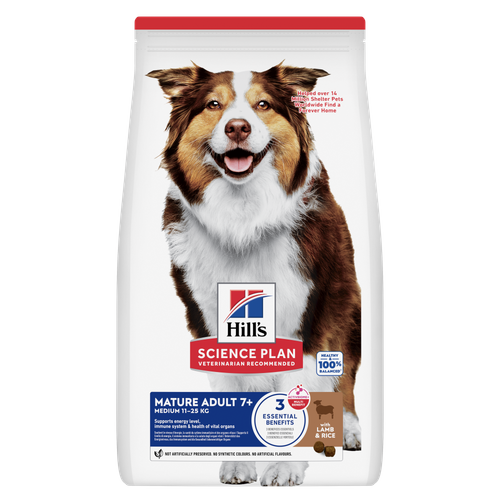
Medium Mature Adult Dog Food
Hill's Science Plan Medium Breed Mature Adult Dog Food with Lamb & Rice is a complete pet food, specially formulated with ActivBiome+ Multi-Benefit Technology.
This food is specifically designed for the ageing needs of medium dogs.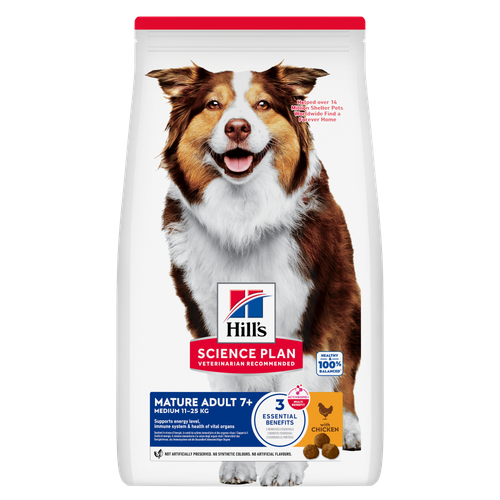
Medium Mature Adult Dog Food
Hill's Science Plan Medium Breed Mature Adult Dog Food with Chicken is a complete pet food, specially formulated with ActivBiome+ Multi-Benefit Technology.
This food is specifically designed for the needs of ageing medium breed dogs.
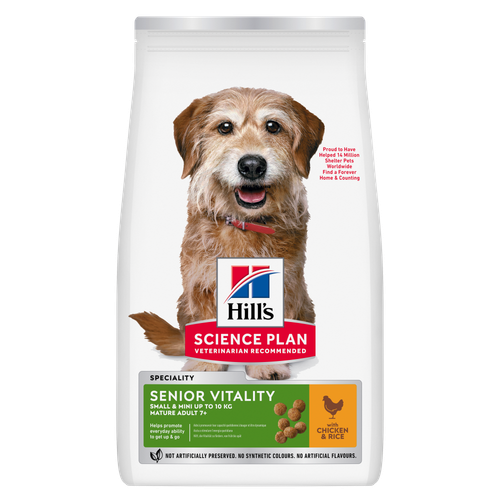
Senior Vitality Small & Mini Mature Adult Dog Food
Hill's Science Plan Senior Vitality Small & Mini Breed Dog Food with Chicken. Our breakthrough formula helps promote your senior dog's everyday ability to get up & go.
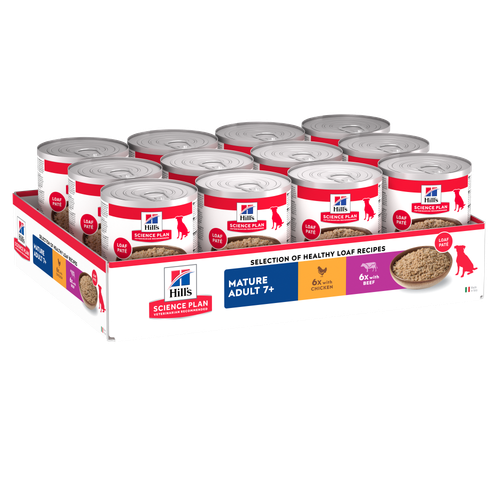
Mature Adult Dog Food
Hill's Science Plan Mature Adult Multipack Wet Dog Food with Chicken & Beef are complete premium pet foods for mature adult dogs from 7 years. Your dog will love these deliciously smooth and savoury minced loaves, formulated to deliver the appropriate amount of energy to support the needs of adult dogs.
Related articles
Caring for a Senior Dog: Physical and Mental Changes to Watch For
Learn the physical and mental signs of aging in dogs and how to keep your senior pet happy and healthy
Is Senior Dog Food Necessary? Understanding the Difference Between Senior, Mature and Adult Dog Foods
Learn why senior dog food is necessary, how it differs from adult formulas, and when to switch to support your dog’s ageing health and vitality.
Arthritis in Dogs: Signs, Causes and Management
Mature and senior dogs can develop arthritis/degenerative joint disease. It can be a source of chronic pain and negatively affect their quality of life.
Helping Senior Dogs and Cats with Incontinence: Causes and Solutions
Learn why senior dogs and cats develop incontinence, the signs to watch for and how bladder control problems can be treated and managed with care and support.

Put your dog on a diet without them knowing
Our low calorie formula helps you control your dog's weight. It's packed with high-quality protein for building lean muscles, and made with purposeful ingredients for a flavourful, nutritious meal. Clinically proven antioxidants, Vitamin C+E, help promote a healthy immune system.
Put your dog on a diet without them knowing
Our low calorie formula helps you control your dog's weight. It's packed with high-quality protein for building lean muscles, and made with purposeful ingredients for a flavourful, nutritious meal. Clinically proven antioxidants, Vitamin C+E, help promote a healthy immune system.