


Many pet parents wonder when to change their cat from adult to senior food, how to do so or even if it’s really necessary. Great advances in nutrition are undoubtedly one of the reasons that our pets are living longer than ever these days, and keeping your cat’s nutrition optimal for their different life stages is important for their overall health. In this article, we’ll look at when cats are considered senior, what makes senior food different and why it is important, how to transition your cat to a senior food and the best way to provide the nourishment they need.
When is my cat senior?
The life stages of cats are generally as follows:
Kitten: 0-6 months (equivalent to ages 0-10 in human years)
Junior: 7 months-2 years (12-24 in human years)
Adult: 3-6 years (28-40 in human years)
Mature: 7-10 years (44-56 in human years)
Senior: 11-14 years (60-72 in human years)
Geriatric: 14+ years (76+ in human years)
As you can see, the adult stage ends around the end of the sixth year. You’ll find that various organisations and food brands use the terms ‘mature adult’ and ‘senior’ differently and interchangeably! For the most part, cats are considered to be in their mature years from the age of around seven, and then senior from around 11 onwards. When exactly this transition happens for your individual cat will depend on their overall health, breed and medical history. Your vet will always be happy to guide you as to the right time to switch to a mature or senior food.


Tasty Tips
How do cats change with age?
Ageing is a fact of life and after years of activity and wear and tear on the body, things inevitably start to become less ‘perky’! As your cat ages, their calorie requirements go down and they become less active. They may start getting stiff with osteoarthritis. Their organs may not function as well as they used to. They may start to have cognitive decline. When they reach old age, they may start to struggle to keep muscle mass and start to lose weight rather than gain it. These changes may go unnoticed for some time, making it important to take senior cats to visit their veterinarian regularly. With this in mind, let’s have a look at how senior food can help with these changes.
How do mature cat foods differ from adult foods?
Mature cat foods generally include
High-quality, highly digestible protein to help maintain lean muscle mass.
Added antioxidants to combat cell ageing.
Added omega-3 fatty acids to support joint health.
Either reduced or increased calories to help maintain a healthy weight depending on your cat’s needs while also helping them feel full.
Altered mineral content to support heart and kidney health.
There are also many different dietetic foods for cats with diagnosed diseases such as kidney disease or diabetes.
How do I transition my cat to a senior food?
If your cat is fit and healthy, this is usually pretty straightforward. You simply need to gradually increase the amount of new food you feed your cat over the course of about a week while simultaneously decreasing the amount of the old food. Make sure you keep enough of the old food to sustain the transition period. A sudden change can sometimes cause an upset stomach or make your cat more reluctant to accept the new food.
If you’re changing brands or switching from wet food to dry food or vice versa, you may need to extend the transition period over a few weeks. Cats are very good at getting hooked on flavours or textures and may need longer to adjust.
If your cat needs a dietetic food, never switch without your vet’s say-so. Some of these foods are not suitable for cats with other health conditions.
Is wet food, dry food or both best for a senior cat?
As long as the food you are feeding your cat is complete and balanced, you can buy whatever suits your budget, your lifestyle and your cat’s tastes and health conditions. There are pros and cons to both:
Wet food
Pros:
The easiest way to get water into your cat. Cats, especially older cats, can be prone to dehydration.
Looks meaty and easily adds variety.
Plenty of texture choices available - loaf, chunks in gravy, minced.
Cons:
Spoils more quickly so can’t be left out, especially in summer.
Messier than dry food.
Tends to be more expensive than dry food.
Dry food
Pros:
Convenient.
Safe to leave out for a longer period of time.
Comes in a wider variety of flavours.
Cheaper than wet food.
Cons:
Pet parents may feel it’s boring. Most cats don’t agree!
May make it more difficult to provide adequate water to an older cat.
It’s ideal, if you can, to feed your cat a combination of wet and dry food throughout their life. This way, your cat is less likely to get hooked on a certain texture and will stay more flexible. You never know when you might need to change. Your cat may develop a medical condition where water intake is essential, and so wet food may be recommended.
How much do I need to feed my senior cat?
This depends on your cat’s ideal weight as well as their activity levels, overall health and the food you are planning to feed them. It’s essential to keep your cat slim throughout life for maximum health and longevity. Regular weight checks at home and regular vet checks will help you catch changes in weight early on. Weight gain or loss can sometimes be one of the earliest signs of disease.
Before you transition to a senior food, ask your vet if your cat has the ideal weight and body condition for their life stage. Your cat may need to start with a weight-loss food first to reach their ideal weight safely and effectively before you transition.
If your cat is already at an ideal weight, the easiest thing to do is follow the feeding guide on the packaging. There are usually mixed guides if you want to feed your cat both wet and dry foods, but you can also ask your veterinarian for feeding recommendations specifically tailored to your cat’s needs. Continue regularly checking your cat’s weight, and adjust the serving sizes according to whether your cat starts to gain or lose weight on the new food.
Little and often for happy, healthy older cats
Cats have relatively short intestinal tracts compared to omnivores like dogs and humans. In nature, they would spend much of the day looking for food and eat 10-20 small meals a day. While we can’t do this for our domestic cats, we can split their ration into smaller, more frequent meals quite simply. Five to six meals a day is ideal. Timed feeders are very useful for this if you are out and about. For example, you could feed your cat wet food morning and evening and have a timed feeder dispense four dry meals throughout the day – and even in the night if your cat pesters you in the wee small hours. Make sure you split their total ration evenly, rather than feeding them extra!
All cats benefit from small, frequent meals, but older cats most of all. It helps keep their intestines moving and keeps their water intake up throughout the day if you’re feeding them wet food or adding water to the dry. It’s also a good way to make sure they’re getting the volume of food they need and have the energy to maintain their physical condition as they head into the super senior years.
In summary
Senior cat food is not a gimmick. Senior foods support the health of your ageing cat in lots of ways. They are gentle on the organs, combat cell ageing, help joints and can support cats’ ageing brains. They are geared toward keeping your cat in ideal body condition and giving you the maximum time possible with your furry companion. After all, isn’t that what we all want? If you’re unsure exactly when to switch to senior food, ask your veterinarian; regular contact with your vet becomes even more important in the senior years, and they will always be happy to help.
Frequently Asked Questions about senior cat feeding
When is my cat senior?
This will depend on your individual cat’s health and activity levels, but in general, cats are considered senior from around seven years of age.
Should I feed a senior cat food?
Yes. Even if your cat seems fit and well, switching to a senior cat food can help keep them in optimal health and support ageing organs such as joints, kidneys and brain.
How often should I feed an older cat?
All cats benefit from 5-6 meals a day, as they have evolved to eat small, frequent meals. However, this is even more important for older or senior cats. It helps keep their intestines moving, ensures their energy and nutrition requirements are easily met, and can help keep their water intake up throughout the day if you are feeding them wet food or soaking kibble.
How much should I feed a senior cat?
This will vary for each individual cat. Firstly, ask your vet if your cat is an ideal weight, as you may need to address that first. Follow the feeding guide on the packaging for your cat’s ideal weight, checking their weight every couple of weeks to start with and adjusting the total amount of food to suit your individual cat.
Reviewed by Becky Mullis, DVM, DACVIM (Nutrition) and Emma Milne BVSc FRCVS.

Related products
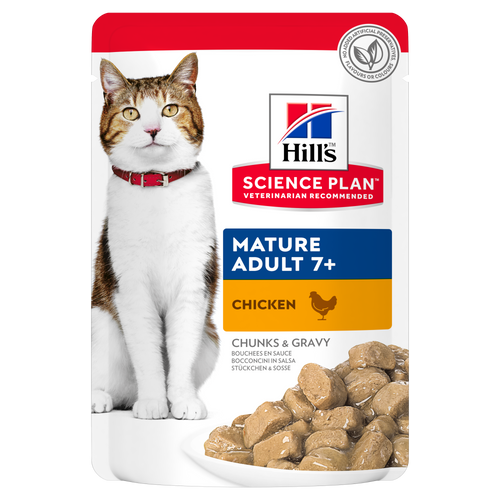
Mature Adult Wet Cat Food with Chicken
Hill's Science Plan Mature Adult Wet Cat Food Premium Chunks in Sauce with Chicken is a complete pet food for mature adult cats 7+ years old
Adult Wet Cat Food with Chicken
Tender chunks in gravy for cats, with high-quality protein to maintain lean muscle. With vitamin E and omega-3s & -6s for healthy skin and balanced minerals to support healthy vital organs.
Adult Wet Cat Food with Chicken
Tender chunks in gravy for cats, with high-quality protein to maintain lean muscle. With vitamin E and omega-3s & -6s for healthy skin and balanced minerals to support healthy vital organs.
Light Adult Wet Cat Food Chicken
Tender chunks in gravy for cats, with L-carnitine and fewer calories for ideal weight management. Packed with high-quality protein, omega-6s, and vitamin E for shiny fur and healthy skin.
Related articles
10 Important Health Tips for Senior Cats
However, as much as we value having them in our lives, it’s easy to take our pets for granted. Your senior cat, on the other hand, appreciates every single thing you’ve ever done. Why not return the favour?

Choosing the Right Food for Your Senior Cat
As your cat grows older, feeding time can be a real challenge for both you and your cat.

Cat Dementia: Signs, Causes and Management
Recognise the signs of dementia in cats and learn about effective management for cognitive dysfunction. Discover more pet care support at Hill's Pet UK.
The Importance of Wellness Visits for Your Senior Cat
Your senior cat could be hiding something – other than your car keys. That’s right, yours could be hiding an illness right now and you’d never even know it.
Put your cat on a diet without them knowing
Our low calorie formula helps you control your cat's weight. It's packed with high-quality protein for building lean muscles, and made with purposeful ingredients for a flavourful, nutritious meal. Clinically proven antioxidants, Vitamin C+E, help promote a healthy immune system.
Put your cat on a diet without them knowing
Our low calorie formula helps you control your cat's weight. It's packed with high-quality protein for building lean muscles, and made with purposeful ingredients for a flavourful, nutritious meal. Clinically proven antioxidants, Vitamin C+E, help promote a healthy immune system.