


Have you noticed while cleaning out your cat's litter tray that they've had diarrhoea lately, making you a little concerned? Millions of cat parents experience this same issue with their cats every year. Whether your cat's stool is soft, discoloured or bloody, or even watery, rest assured you're not alone in your litter tray observations.
What is Cat Diarrhoea?
Diarrhoea is defined as stool (poo, poop or faeces, as it’s also known) that is softer, looser or more watery than it should be. Cats with diarrhoea may go to the bathroom more frequently than usual, have accidents in the house, and may pass blood, mucus or even parasites in their faeces.
Though most cases of cat diarrhoea resolve in a matter of hours or days without intervention, cats that have diarrhoea for more than a few days, or those that show more severe signs (such as vomiting, appetite loss, bloody stools, watery stools or tiredness), should be seen by a vet immediately.
It's important to note that smaller cats, kittens and senior cats with diarrhoea are especially susceptible to dehydration and should always be evaluated by a vet.

Symptoms of Diarrhoea in Cats
Along with having unhealthy-looking stools (usually loose or watery in appearance), cats with diarrhoea may have the following symptoms:
- Mucus or blood in the stool
- Worms in the stool
- Accidents in the house
- Defecating with increased frequency
- Straining to defecate
- Nausea or vomiting
- Loss of appetite
- Tiredness or weakness
- Abdominal pain
- Weight loss
Causes of Cat Diarrhoea
There are many causes of diarrhoea. Often it occurs when a cat eats something unusual or when their meal plan changes abruptly. When switching from one kind of cat food to another, it's best to transition slowly over a week, gradually mixing in more of the new food with less of the old food. This transition allows the pet's digestive system to adjust and lowers the chance of diarrhoea.
Other potential causes of cat diarrhoea include:
-
Viruses, e.g. feline infectious peritonitis (FIP)
-
Parasites, e.g. worms, giardia, cryptosporidium
-
Imbalances in the microbiome in your cat’s gut
-
Stress
-
Dietary indiscretion (eating something they shouldn’t have!)
-
A gut blockage
-
Food intolerances/allergies
-
Antibiotics and other drugs
-
Poisoning/toxins
-
Gut infections, e.g. salmonella, campylobacter
-
Kidney disease
Can I treat my cat’s diarrhoea at home?
If your cat seems bright and active, they may just have a ‘bug’ or may have eaten something that didn't agree with them. In these cases, you don’t need to panic. Encourage drinking and ask your vet for a highly digestible ‘recovery’ food to feed them for a few days until all is normal again. A veterinary exam can help rule out any other signs of illness. Many cases of cat diarrhoea do resolve on their own. If your cat will eat wet food, this is a good way to keep them hydrated.
Never give your cat medication that has not been prescribed for them, and never give medication meant for other species, especially dogs and humans.
Don’t give your cat treats, dairy products, or rich foods until they’re fully recovered.
When is cat diarrhoea an emergency and when should I see a vet?
Does your cat appear to be feeling sick or acting more tired than normal? Do they have a poor appetite or any other symptoms that stray from their norm? Are they also vomiting? If a case of cat diarrhoea is an isolated incident that resolves spontaneously in less than a few hours and doesn't involve other symptoms, it's generally not treated as an emergency.
However, you should consider cat diarrhoea an emergency if:
- your cat is lethargic
- your cat is also vomiting
- your cat has no appetite
- your cat seems dehydrated
- your cat’s diarrhoea has blood in it or is very dark or black
Although not an emergency, you should also see your vet if:
- the diarrhoea lasts more than 24 hours, even if your cat is bright and active
- the diarrhoea comes and goes for any length of time
- your cat is a kitten or an older cat, as they can become dehydrated faster than a normal adult cat
How Your Vet Determines the Cause
Vets may use several tools to determine the cause of your cat's diarrhoea, including:
-
The cat's medical history
-
A physical examination
-
Basic lab work (e.g. blood work, faecal exam)
-
Radiography (e.g. x-ray)
-
Sonography (e.g. ultrasound)
-
Gastrointestinal function tests (blood tests)
-
Endoscopy/colonoscopy and biopsy (to retrieve a tissue sample from the digestive tract)
-
Medication trials (assessing response to medication)
- Food trials (assessing response to certain foods)
Treatment of cat diarrhoea
Treating diarrhoea depends on its underlying cause. There are many available treatments for diarrhoea that may be recommended by your vet depending on a variety of factors. However, whatever the underlying cause, nutrition plays a key role in managing this condition. Diarrhoea falls into 3 general categories outside of the self-limiting cases we mentioned before:
- Food-responsive diarrhoea can be further divided into:.
- Adverse food reactions – allergies and intolerances. Cats with adverse food reactions are usually given a hydrolysed diet or a novel protein diet. These will usually need to be fed for life.
- Diarrhoea due to a microbiome imbalance. Many cats respond to a simple change of diet to one which has high levels of prebiotic fibres to nourish the ‘good bacteria’ in the gut and promote gut health. These diets also usually have high levels of omega three to reduce inflammation and are highly digestible.
- Steroid-responsive diarrhoea. This is also called immunosuppressant-responsive diarrhoea or inflammatory bowel disease (IBD). As it sounds, these cases often need medication as well as a high quality diet to get a response.
- Underlying disease. If your vet finds that your cat has an underlying medical problem like kidney disease or hyperthyroidism, they may prescribe other forms of treatment. Sometimes, this also includes a change of diet, as many organ diseases can be helped with therapeutic diets..
While cat diarrhoea is never pleasant for you or your cat, with the right treatment and help from your vet your cat can get back to their happy, healthy self.
Cat Diarrhoea FAQs
What causes diarrhoea in cats?
A number of things, including food allergies, stress, infections, parasites and dietary indiscretion.
When is cat diarrhoea an emergency?
In situations where:
- your cat is lethargic
- your cat is also vomiting
- your cat has no appetite
- your cat seems dehydrated
- your cat’s diarrhoea has blood in it or is very dark or black
Is wet food better for cats with diarrhoea?
Yes. Diarrhoea can quickly cause dehydration, especially in kittens and older cats. Wet food is a great way to keep cats hydrated.
Can stress cause diarrhoea in cats?
Yes. Stress can cause many problems in cats including vomiting, diarrhoea, cystitis and over-grooming.
Reviewed by Karen Shenoy, DVM and Emma Milne, BVSc FRCVS

Related products
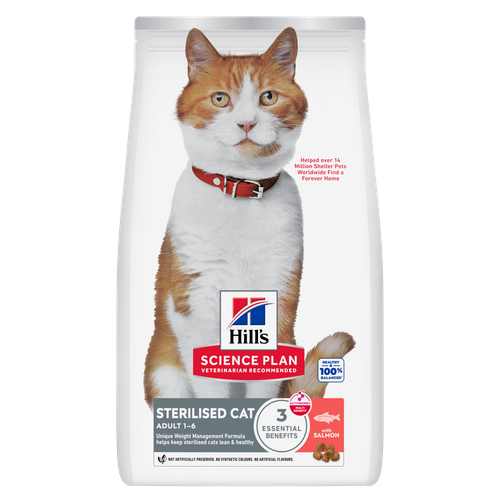
Sterilised Adult Cat Food
Hill's Science Plan Adult Sterilised Cat Dry Food with Salmon is specially formulated with ActivBiome+ Multi-Benefit Technology. It is a precisely balanced nutrition, tailored to meet the needs of sterilised cats, to help keep them lean & healthy.
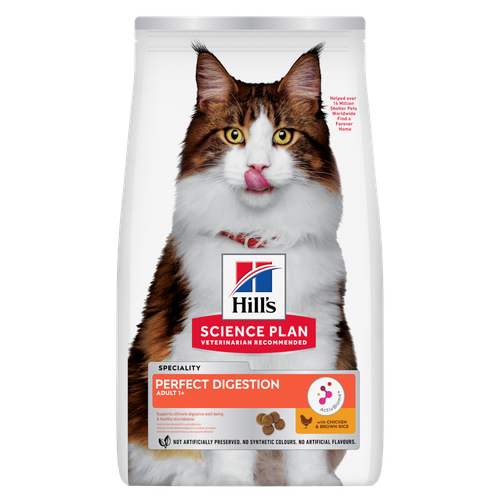
Perfect Digestion Adult Cat Food
Hill's Science Plan Perfect Digestion Cat Food with Chicken & Brown Rice nourishes your cat's unique microbiome and helps them reach their full potential.
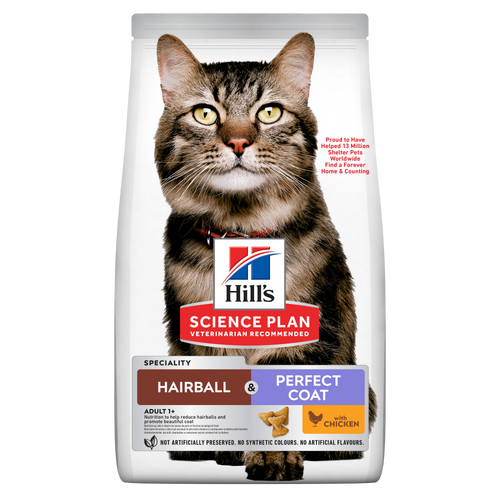
Hairball & Perfect Coat Adult Dry Cat Food with Chicken
Hill's Science Plan Hairball & Perfect Coat Adult Cat Food with Chicken is formulated to effectively help avoid hairball formation in adult cats while promoting a beautiful coat. Thanks to its mix of essential omega-6 fatty acids, this food benefits the cat's skin and fur, keeping them healthy and shiny. Our Advanced Fibre Technology helps reduce hairballs by naturally promoting their passage through the gut. This food is formulated with high-quality protein for a perfectly balanced, great-tasting recipe.
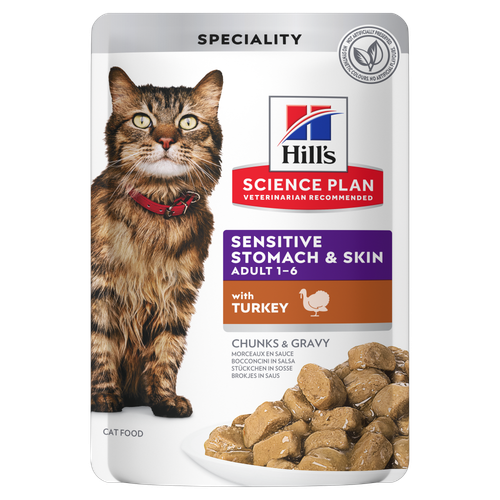
Sensitive Stomach & Skin Adult Cat Food
Hill's Science Plan Adult Sensitive Stomach & Skin Cat Premium Chunks in Sauce with Turkey is a complete pet food for adult cats aged 1-6 years
Related articles
FLUTD And Urinary Tract Infections in Cats
Learn about FLUTD and urinary tract infections in cats, including their symptoms, causes, and treatments. Visit Hill's Pet UK for expert cat care guidance.
Pancreatitis In Cats: Signs, Causes And Treatment
Learn about the signs, causes and treatments of pancreatitis in cats and discover the different types of disease. Discover expert advice at Hill's Pet UK.
How to Train a Kitten to Use the Litter Tray
Master the steps to litter box training your kitten with our easy-to-follow guide. For health and training tips, visit Hill's Pet UK.
Why is my Cat Peeing Blood?
Learn about the potential causes and treatments of your cat peeing blood and when to seek vestiary care. For expert care advice on cat health, visit Hill's Pet.
Put your cat on a diet without them knowing
Our low calorie formula helps you control your cat's weight. It's packed with high-quality protein for building lean muscles, and made with purposeful ingredients for a flavourful, nutritious meal. Clinically proven antioxidants, Vitamin C+E, help promote a healthy immune system.
Put your cat on a diet without them knowing
Our low calorie formula helps you control your cat's weight. It's packed with high-quality protein for building lean muscles, and made with purposeful ingredients for a flavourful, nutritious meal. Clinically proven antioxidants, Vitamin C+E, help promote a healthy immune system.